 11
11
A stream is not a fan.
That’s the mistake a lot of independent artists make in 2026.
They celebrate numbers, screenshots, and algorithm spikes without realizing that most listeners disappear the same day they discover the song. Attention is easier to get than loyalty. The real challenge isn’t getting people to hear your music — it’s getting them to come back.
If you want a sustainable music career, your goal can’t just be streams. Your goal has to be connection.
Before diving deeper into fan conversion strategy, read Thrive Indie’s pillar guide: Streaming Growth Strategies: The Ultimate Pillar for Independent Artists (2026). It breaks down how streaming should support long-term audience growth rather than become the end goal.
The artists building lasting careers today understand something important:
Fans buy, share, show up, and stay.
Listeners scroll.
Here’s how independent artists can turn casual listeners into real supporters.
Streams, while perceived as an indicator of an artist’s success, don’t constitute the foundation of a sustainable career. More importantly, streams don’t inherently cultivate audience loyalty, ownership, or cultural influence. Real sustainable careers are built through direct relationships with audiences and strategic business infrastructure.
With that said, streaming acts more as a promotional metric than a career engine. Without knowing it most artists focus almost entirely on discovery.
They want:
However, these metrics alone neglect the real issue most artists face. That issue is what happens after someone discovers their music.
A casual listener will hear your song once and never return. A fan, on the other hand, follows your journey, joins your community, and supports future releases.
That’s why independent artists need systems — not just promotion.
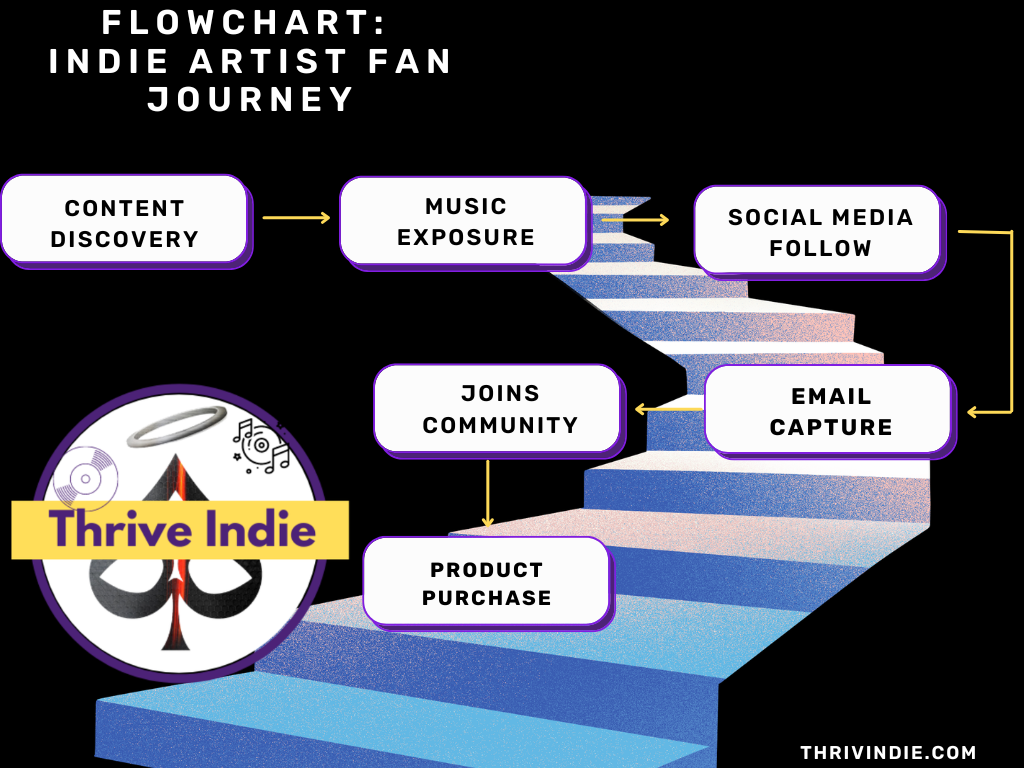
Without a proper system in place, the listener journey looks like this:
TikTok → Spotify Stream → Gone
To build leverage, the listener journey should resemble the chart below.
Artists like Russ spent years building direct relationships with supporters online before becoming mainstream successes. His audience didn’t just connect with the music — they connected with the journey.
That connection creates longevity.
Social media platforms give artists access but they don’t give ownership. That’s an important distinction. Fan ownership is significantly more important a large follower count because it gives artists direct access to their audience which implies trust and economic leverage. Something investors look for when deciding to invest.
Instagram followers, TikTok views, and Spotify listeners are all rented attention.That’s because social media algorithms determine visibility and engagement. As a result a large follower count gives the illusion of influence without guaranteeing meaningful support. We all know artists who boast large following but can seem to get off the ground, this is why.
In contrast, fan ownership refers to direct relationships through;
And other channels independent of algorithmic control. These audiences are more likely to make purchases, attend events and support campaigns.
That’s why email capture should be a priority for every independent artist.
Every listener should have a clear path toward becoming:
This is where many artists leave money on the table.
They spend years building audiences for platforms they don’t own instead of building systems they control.
According to Spotify for Artists, repeat engagement signals like saves, repeat listens, and direct audience interaction heavily influence long-term growth on streaming platforms.
In other words:
the platforms themselves reward real fan behavior.
Most artist content has no conversion strategy behind it.
It’s usually:
But effective content should move audiences somewhere.
Every piece of content should answer one question:
“What do I want this viewer to do next?”
That next step could be:
Content without audience capture is just temporary visibility.
That’s why lead magnets are becoming increasingly important for independent artists.
A lead magnet gives listeners a reason to enter your ecosystem voluntarily.
Examples include:
At Thrive Indie, one example is the free guide:
“How Independent Artists Get Paid.”
Instead of only promoting songs, artists should also promote value.
A listener may not buy merch immediately.
But they might exchange their email for a resource that helps them.
That single interaction creates a direct relationship you can build on later.
People rarely support artists financially if there’s no emotional connection.
That’s why storytelling matters so much.
Artists like Tyler, The Creator and Billie Eilish built strong fan communities because everything around the music felt intentional.
The visuals.
The personality.
The interviews.
The aesthetic.
The messaging.
It all reinforced a recognizable identity.
Independent artists should think the same way.
Ask yourself:
Fans don’t just buy songs.
They buy narratives, experiences, and identity.
That’s why behind-the-scenes content performs so well.
Fans enjoy feeling involved in the process.
Showing:
creates emotional investment.
And emotional investment increases monetization opportunities.
Virality is unpredictable.
Community compounds over time.
An artist with 2,000 highly engaged fans can often outperform an artist with 200,000 passive followers.
Why?
Because engaged fans:
That’s real business infrastructure.
Independent artists should focus less on audience size and more on audience depth.
One of the best ways to build audience depth is consistent interaction. Reply to comments.
Acknowledge supporters.
Reward loyal fans.
Make people feel seen.
Smaller artists actually have an advantage here because they can still create genuine direct relationships at scale.
And today’s audiences value accessibility more than ever.
According to IFPI Global Music Report, emotional connection and artist accessibility are becoming increasingly important factors in fan engagement.
The relationship matters just as much as the music now.
Most monetization strategies fail because the relationship layer is missing.
Fans spend money when trust already exists.
That trust is built through:
Once trust exists, monetization becomes much easier.
Independent artists can monetize through:
But none of those strategies work well without audience ownership.
You don’t need millions of followers.
You need direct access to people who genuinely care.
That’s why email marketing remains one of the highest-converting tools in music.
Algorithms decide who sees your posts.
Emails go directly to your audience.
For more insight into platform behavior and retention strategy, read Thrive Indie’s article “How the Spotify Algorithm Actually Works in 2026.”
The future of the music industry belongs to artists who own their audience.
Streams are important.
But direct fan relationships create leverage.
The independent artists building sustainable careers today are focused on:
Because casual listeners disappear.
Fans stay.
And fans are what turn music into an actual business.
If you’re serious about building a sustainable career as an independent artist, stop focusing only on attention.
Start focusing on ownership.
And if you want a deeper breakdown of modern music income strategies, download Thrive Indie’s free guide: