 11
11
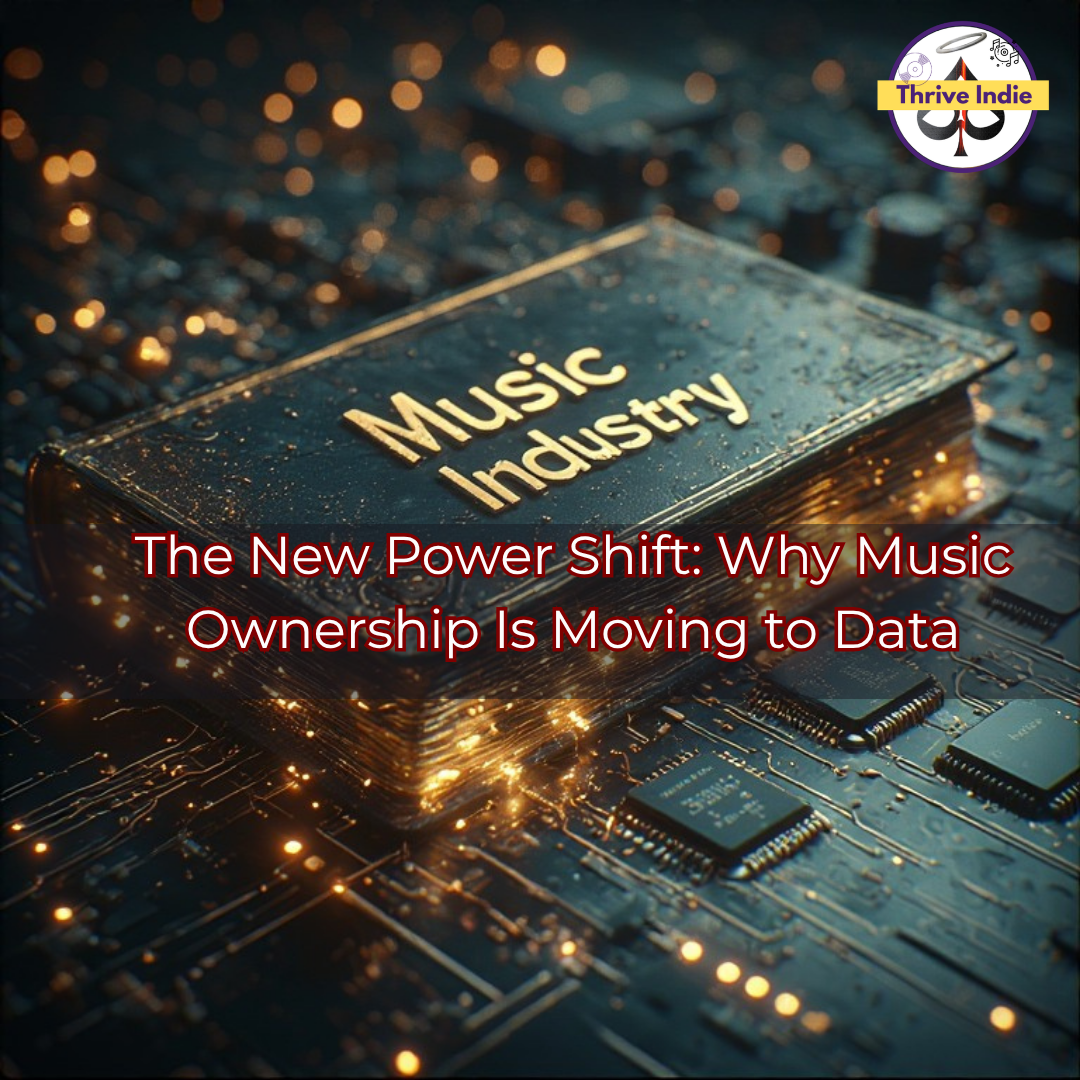
For decades, the music industry revolved around one thing:
Ownership of rights.
Whoever owned the masters and publishing controlled the money. But that model is rapidly evolving. Today, a new form of ownership is emerging—one that most artists are completely overlooking:
Data.
Before we go further, revisit the foundation: Future of the Music Industry: It’s Already Controlled. It breaks down how power has already been consolidated. This article explains the next phase, why control is shifting from rights… to data.
Because in 2026, owning your music isn’t enough.
If you don’t own your data, you don’t own your future.

Historically, the power structure was simple:
This is why record deals were structured around:
Whoever controlled the rights controlled licensing, distribution, and revenue streams. That’s why catalog acquisitions exploded in recent years, with firms like Hipgnosis and major labels spending billions acquiring song rights.
On paper, this still matters.
But it’s no longer the full picture.
Streaming didn’t just change distribution. It changed what’s valuable. Platforms like Spotify, Apple Music, and YouTube don’t just host music—they collect data.
This data determines:
According to IFPI’s global music report, streaming now accounts for the majority of industry revenue—and with it, the majority of insight into listener behavior.
That insight is power.
Because whoever controls the data controls:
And right now, artists don’t control that data.
Platforms do.
Here’s the hidden layer most artists miss:
Algorithms are only as powerful as the data they’re trained on.
Spotify’s recommendation system, for example, analyzes:
(Explore more about how this impacts artists in Spotify Algorithm Explained for Independent Artists)
This creates a system where:
Data feeds algorithms → Algorithms control exposure → Exposure drives revenue
If your data signals aren’t strong:
And you don’t even see why.
Imagine two artists release similar-quality songs:
Artist A:
Artist B:
The difference?
Data signals.
Not varying talent, not the effort, not even the marketing strategy.
Just how the system interprets early performance.
That’s the shift:
Ownership of outcomes is moving away from creators… to data systems.
This is where the power imbalance becomes obvious.
Streaming platforms don’t just distribute music—they control:
Artists, on the other hand, see:
According to MIDiA Research, one of the biggest challenges for independent artists is the lack of direct access to actionable fan data.
This creates a dependency loop:
This loop keeps independent artists reliant on these platforms.
For years, the conversation around ownership and music has centered on who controlled the masters. Artists have been told, “Own your masters, own your career.”
That’s incomplete advice in today’s landscape.
Because even if you own your masters:
So while you technically own your music…
You don’t fully control:
This is why many independent artists feel stuck:
They’ve achieved ownership without leverage. They own a product they can’t market or sell effectively.
The next evolution of the music industry is already happening:
Audience ownership > Content ownership
The artists who are winning understand this.
They focus on:
(See: How Independent Artists Make Money in 2026)
Because when you own your audience data, you can:
Let’s break this down practically.
When you rely only on streaming platforms:
But when you build:
You gain:
(Explore: What to Offer in a $5 Membership Tier)
This is why:
Because the data you own compounds.
Platform data doesn’t.
A growing number of independent artists are generating full-time income with:
They’re not relying on:
They’re leveraging:
(Deep dive: Micro-Influencer Revenue Models)
This model works because:
Control shifts from platforms… to relationships.
AI is about to make this gap even wider.
Why?
Because AI thrives on data.
We’re already seeing:
This means future success will depend even more on:
Who owns the best data—not just the best music.
If the power shift is moving toward data, your strategy needs to reflect that.
Here’s the new playbook:
Streaming should:
Not:
Every release should drive toward:
Prioritize:
Over:
Don’t wait for:
Create:
Ownership in music used to mean:
Now it means:
Because in a system where platforms control distribution…
Data is the only leverage artists can truly own.
The music industry isn’t just shifting—it’s redefining what ownership actually means.
And most artists are still playing by old rules.
They’re focused on:
But the real power is moving somewhere else:
Data.
Because in the modern music economy:
And the artists who understand that early…
Will be the ones who actually own their careers.
If you’re serious about building a sustainable music business, stop asking:
“Do I own my music?”
Start asking:
“Do I own my audience?”