 11
11

The music industry sells a compelling narrative: anyone can upload a song, go viral, and build a career.
But beneath that surface lies a far more calculated reality.
Today’s music ecosystem isn’t truly competitive—it’s structurally controlled.
Before we go deeper, read the foundational breakdown here: Future of the Music Industry: It’s Already Controlled. That piece outlines the macro shift. This article goes further—explaining how control actually manifests in day-to-day artist outcomes.
Because if you still believe the industry is a level playing field, you’re already at a disadvantage.

Let’s start with hard numbers.
That’s not a competitive marketplace. That’s an oligopoly.
In traditional economics, competition requires:
The modern music industry fails all three.
Yes, anyone can upload music. But visibility, monetization, and scale are gatekept—just in more subtle ways than before.
This is where most artists misunderstand the system.
Distribution has been democratized. Attention has not.
Over 5 trillion streams occurred globally in 2025—but that doesn’t mean opportunity is evenly distributed.
In fact, the opposite is true.
From a long-tail perspective:
As one Reddit analysis of Luminate data summarized:
“About 88% of tracks were streamed 1,000 times or fewer.” (Reddit)
That’s not competition. That’s algorithmic concentration.
Streaming platforms optimize for:
Which means:
This creates a feedback loop:
Exposure → Engagement → More Exposure
And if you’re not in that loop early, you’re effectively invisible.
In the past, gatekeepers were:
Now?
It’s algorithms.
Spotify’s recommendation systems, playlist ecosystems, and discovery feeds determine:
But here’s the key insight:
Algorithms are not neutral.
They are trained on:
This means independent artists aren’t just competing against each other—they’re competing against a system optimized to minimize risk.
Let’s talk money.
The average streaming payout:
That means:
Now combine that with:
What you get is a system where:
Revenue is not purely a function of fan demand—it’s a function of system positioning.
This is why:
The industry didn’t become controlled overnight.
It consolidated—strategically.
Major labels expanded beyond:
At the same time, streaming platforms became:
This vertical integration means a handful of entities now control:
That’s not a market.
That’s a closed-loop ecosystem.
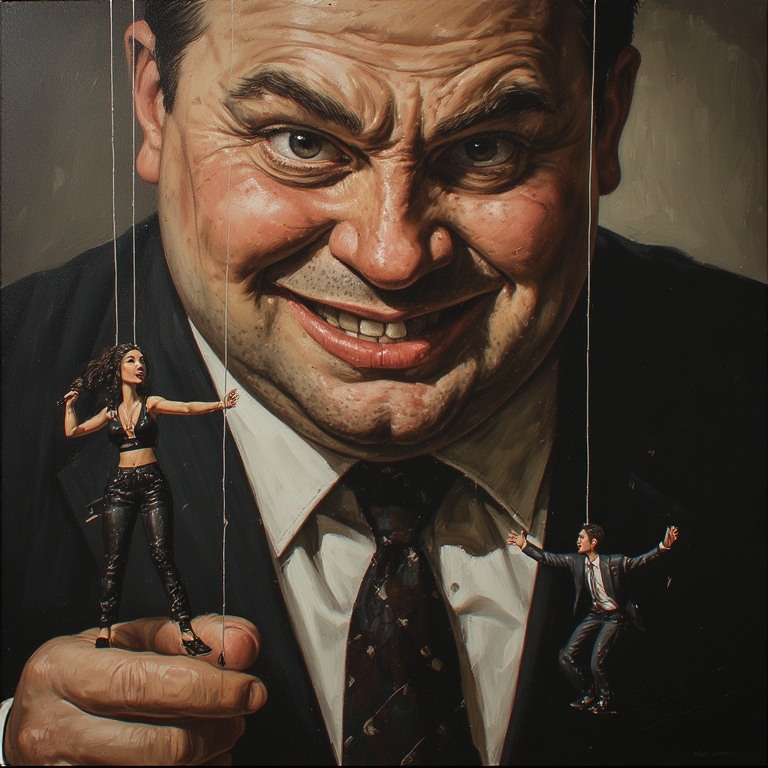
Here’s the paradox:
The industry is growing—but becoming less competitive.
Global music revenue hit $31.7 billion in 2025
Streaming subscriptions continue to rise
Emerging markets are expanding rapidly
On paper, this looks like an opportunity.
In reality, growth is being captured by the same dominant players.
Why?
Because:
So when the pie grows, they simply take a larger slice.
If you think control is an issue now, AI is about to amplify it.
Recent reports show:
For example:
This introduces two major issues:
This further centralizes control.
This is the part most articles won’t tell you:
You are not competing in a fair market.
And that’s actually good news—if you understand it.
Because it means:
Independent artists who are winning today are doing three things differently:
Streaming is:
Not a business model.
(See: How Independent Artists Make Money in 2026 on Thrive Indie)
Instead of chasing:
They focus on:
(Related: What to Offer in a $5 Membership Tier)
The biggest misconception in music:
You need millions of fans.
It’s a lie.
You need:
(Explore: Micro-Influencer Revenue Models)
Let’s be clear:
The music industry isn’t broken.
It’s functioning exactly as designed.
And all three reinforce each other.
That’s control.
But independence has never been more viable—if you stop playing by outdated rules.
The biggest lie in the modern music industry is that it’s more competitive than ever.
It’s not.
It’s more:
And once you see that clearly, everything changes.
Because success is no longer about:
It’s about:
If you want to win as an independent artist in 2026 and beyond, stop asking:
“How do I compete?”
Start asking:
“What do I control?”