 11
11
For independent artists, local shows are often the first step toward building a real career in music. But performing regularly in your hometown isn’t the end goal. The real opportunity is using those early performances to expand demand beyond your local market and build a regional fanbase.
Artists who successfully transition from local performers to regional touring acts usually follow a deliberate strategy. They use local shows to test songs, grow fan relationships, gather audience data, and build the momentum needed to expand into nearby cities.
This strategy fits directly into the broader revenue framework outlined in our pillar guide, How Independent Artists Get Paid in 2026 (Without a Record Label), which explains how independent musicians generate income through touring, merchandise, streaming, and fan engagement.
If done correctly, local shows can become the launchpad that turns a hometown following into consistent regional ticket sales.
Most independent artists plateau because their audience remains concentrated in a single city. Once they’ve played the same venues multiple times, attendance stops growing.
Regional demand solves this problem by expanding your audience across multiple markets.
Instead of one local fanbase, successful artists build clusters of fans across several cities.
Benefits of regional demand include:
Regional demand also makes routing tours far more efficient, which is one of the biggest drivers of touring profitability. (If you’re planning your first tour, read our breakdown of Touring Profit Breakdown for Independent Artists.)
Most artists play shows and focus only on the performance itself. But the most successful independent artists treat local shows as market research opportunities.
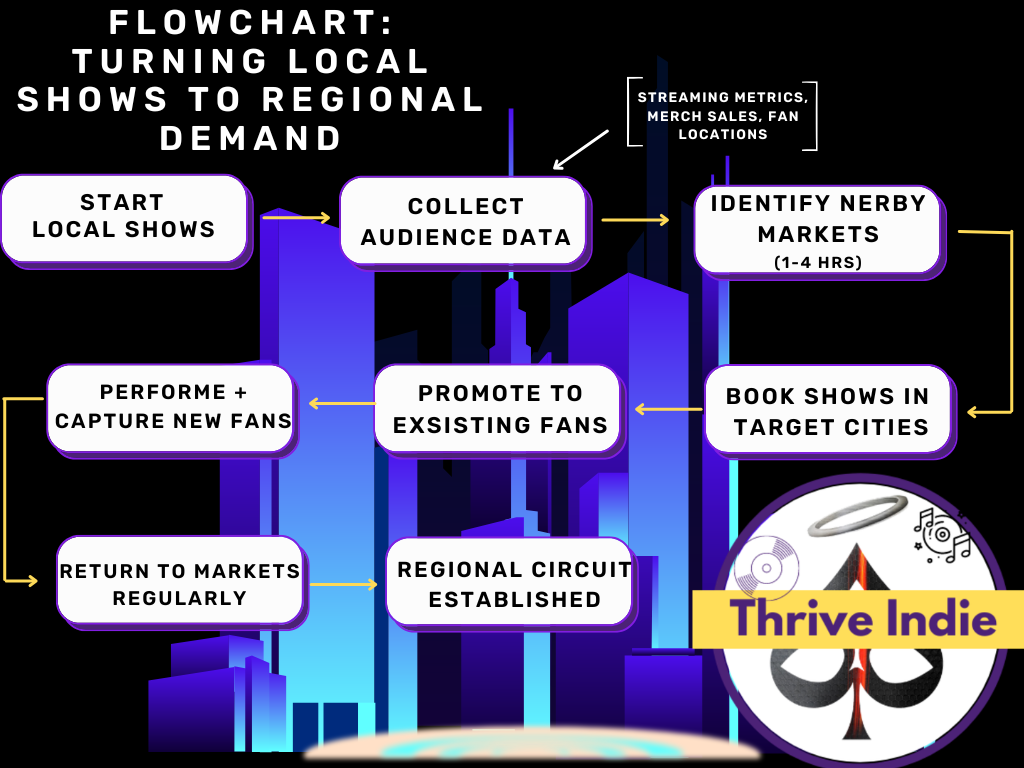
Every performance can generate valuable data about your audience.
Examples include:
Platforms like Spotify and Bandsintown provide location analytics that can reveal where listeners and fans are concentrated.
These insights help identify the next cities to target for expansion.
For example, if your streaming analytics show strong listener growth in nearby cities like Atlanta, Charlotte, or Nashville, those markets should be prioritized for future shows.
High-value industry research also shows that touring significantly increases streaming engagement in cities where artists perform.
Regional growth is rarely achieved through advertising alone. It often happens through fan networks.
When local fans travel or share music with friends in other cities, they become natural ambassadors for your music.
Artists can encourage this by:
Direct fan communication channels are particularly important because they allow artists to announce shows in new cities directly to their audience.
This dramatically increases ticket conversion rates.
One of the biggest mistakes independent artists make is trying to tour nationally too early.
Successful artists typically expand outward in geographic layers.
For example:
Phase 1: Local Market
Play consistently in your home city and build a core fanbase.
Phase 2: Nearby Cities
Target markets within driving distance—usually 1–4 hours away.
Phase 3: Regional Circuit
Develop a circuit of cities that can support recurring shows.
Touring works best when markets are clustered geographically, reducing travel costs and increasing efficiency.
Research from the global live music industry shows that the majority of emerging artist tours are built on regional circuits before national expansion.
Cross-market collaboration is one of the fastest ways to expand demand.
Partnering with artists who already have audiences in nearby cities allows you to tap into established fanbases.
Strategies include:
For example, if an artist from Charlotte has a strong local following, booking a co-headline show can introduce both artists to new audiences.
This approach reduces risk for promoters and increases turnout.
Streaming analytics are one of the most powerful tools available to independent artists.
Platforms like Spotify for Artists provide detailed geographic insights showing where listeners are located.
These insights can help determine:
Artists who use streaming data to guide touring decisions often see stronger ticket sales in new markets.
This strategy has become increasingly important as streaming platforms expand global reach.
The goal of your first show in a new city is not necessarily profit. It’s fan acquisition.
Once you’ve performed in a city, you can begin building a repeat audience.
Tactics for building repeat demand include:
Many successful artists return to the same cities every 6–12 months, gradually increasing venue size as demand grows.
This consistent presence is what ultimately turns small audiences into reliable ticket sales.
Many successful independent artists followed this exact strategy early in their careers.
One notable example is Russ, who built his career by consistently touring smaller markets and developing regional fan clusters before expanding into major venues.
Instead of chasing national exposure immediately, he focused on building strong demand in specific regions, which eventually allowed him to sell out larger venues across the country.
This type of gradual expansion is far more sustainable than attempting rapid national touring.
Artists who successfully build regional demand gain several long-term advantages:
Higher guarantees from promoters
Promoters are more willing to book artists who consistently draw audiences in multiple cities.
More efficient touring
Regional circuits reduce travel costs and allow artists to play more shows per tour.
Stronger brand growth
Fans in multiple markets create stronger social media and streaming engagement.
Better career sustainability
Artists with diversified geographic audiences are less dependent on a single market.
Regional demand is often the turning point that transforms an emerging artist into a sustainable touring act.
Local shows are only the beginning of an artist’s growth strategy.
The real opportunity lies in using those performances to expand into new markets and build a regional fanbase.
Artists who approach local shows strategically—collecting data, building fan relationships, and targeting nearby cities—can turn early performances into a sustainable touring ecosystem.
This regional growth model is a core part of the modern independent artist economy.
To understand how touring fits into the larger revenue ecosystem for independent musicians, read our complete guide: How Independent Artists Get Paid in 2026 (Without a Record Label).