 11
11

Historical Note: Originally published in 2019, this essay explored the idea that followers, likes, or visibility don’t determine an artist’s true influence, but rather their ability to affect human behavior. Seven years later, that idea has become foundational to how Thrive Indie evaluates cultural impact, audience ownership, and artist value. The original argument is preserved below, with minor updates for clarity and accuracy.

For artists in the music industry, influence is more valuable than money — Hear me out. The word influence and the term ‘influencer’ are thrown around grotesquely today. An individual with 25K IG followers can pass as an influencer in most circles. The number of likes and views one receives on any given post can be another misleading measurement of someone’s actual influence.
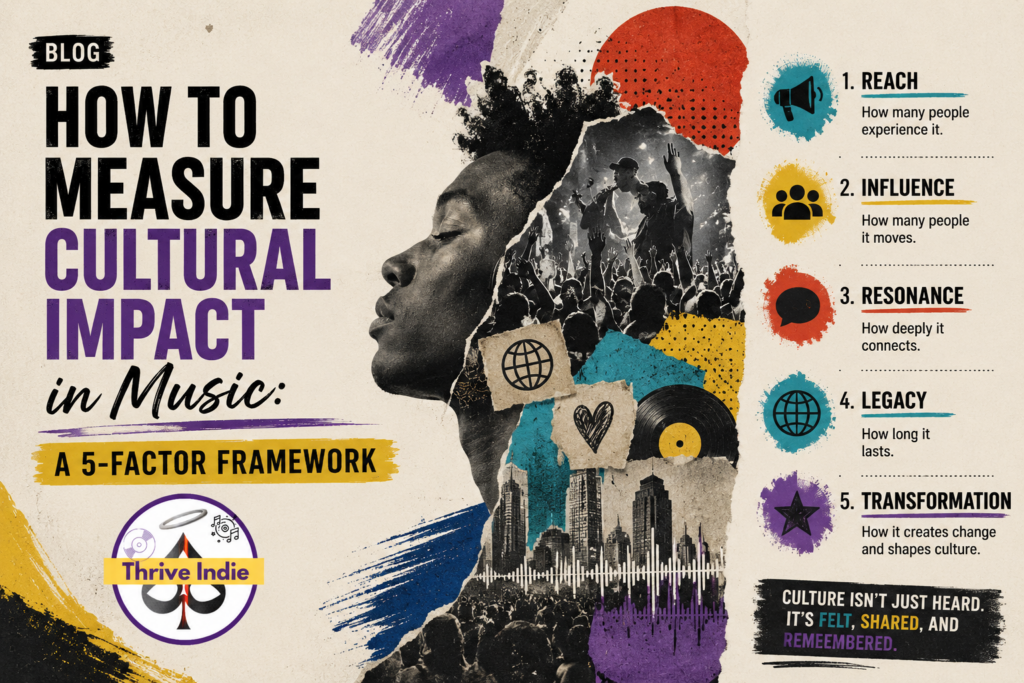
2026 Update: Seven years after this article was originally published, the distinction between attention and influence has become even more important..This distinction between what is measurable and what is meaningful remains central to how Thrive Indie evaluates artist success today. Our updated framework for measuring cultural impact in music expands that idea across five factors: attention, conversation, influence, behavior change, and longevity.
By definition, influence is the ability to affect a person’s character, development, or behavior. In business, it is the ability to bring others to your way of thinking without force or coercion. This skill is highly coveted by professionals in every industry. Being able to get a person to ‘buy-in’ to a brand or idea is what every business wants AND needs to be successful long term.

Capital is a necessity for an independent artist. An artist has to either have the funds on hand to create quality one-of-a-kind content and market it or be connected with someone who is willing to invest the money for them. There is no way around this. However, an artist can spend the big bucks and produce high-quality content with great marketing strategies to accompany it. But if they can not convince people to buy from them, all of their efforts are wasted.
At the end of the day, artists are salespeople. Unique in method but salespeople all the same. Sales are what keep the business world spinning. For most artists, their ability to sell will make or break their careers.
It doesn’t matter how many followers an artist has if they can not sell 10 tickets to a local venue. Nobody is going to book them. If an indie act cannot sell their merchandise to their fan base, then what organization will sponsor them? That’s what real influence is. Getting others to buy what you are selling. In other words, without influence there is no money.
Artists have to face reality. Music doesn’t make much money by itself. Hard album sales are practically non-existent, and streaming pays a fraction of what artists actually deserve. In fact, most of the money for artists comes in with tours, merchandise, and paid features. Everything in between is better off being considered a promotional tool. Artists who can cultivate their influence and make it work for them earn more money and have more longevity.

Building real influence as an artist is no simple task, but it can be done. Unlike most salespeople who rely on planned pitches to sell products, artists have their music. Music penetrates the mind and soul. It reaches deeper than logic and pulls on emotional cords. Any sales expert can tell you that most people buy from emotional impulse rather than logic. This means that how something makes us feel weighs more on our purchasing decisions than our practical needs.
Making music consistently that makes people feel good is an easy way for artists to begin cultivating their influence. Pain is another strong emotion that artists can pull from. Everyone has felt pain; music that echoes that pain is relatable and easily digestible.
Influence isn’t about the number of followers one has or likes they receive. Having real influence can affect these metrics but is not the determining factor. Just look at the 18-year-old Instagrammer who had over 2 million followers and yet failed to sell 36 shirts.
Real influence is the ability to affect one’s thinking and decisions. The easiest way to affect the thinking and decisions of others is to connect with them on an emotional level. Music is a VERY effective way to shift the emotional state of people. Artists should focus on creating music that evokes emotion and draws from relatable experiences. Once an artist can make an individual feel something, they will see how much more willing those people are to support them through purchase.
This essay represents one of Thrive Indie’s earliest attempts to separate attention from genuine influence. That idea has since evolved into a broader philosophy about how we measure artist success, cultural impact, technology, and sustainable careers.
Explore The Intellectual History of Thrive Indie to see how this idea connects with the larger body of music industry analysis developed across Thrive Indie.