 11
11
Essays on Music, Technology, Culture & Career Strategy
The music industry isn’t short on information. It’s short on understanding.
Every day, artists are told how to get more streams, grow on social media, trigger algorithms, release music, build a fanbase, and market themselves more effectively. Much of that advice is useful. But tactics without context rarely produce lasting careers.
The more fundamental question is this: Why does the music industry work the way it does?
That question has guided Thrive Indie from the very beginning.
Every essay in this collection began with a question about how the modern music industry actually works. Over time, those questions evolved into a framework for understanding artists, technology, business, and culture.
Rather than reading these essays as isolated articles, think of them as connected conversations. Each section builds upon the last, moving from the philosophy of success, to the tech shaping discovery, to the economics driving the business, to the systems that sustain careers, and finally to the real-world case studies that bring those ideas to life.
Whether you’re an independent artist, manager, music entrepreneur, or simply fascinated by the business of music. I hope that these essays help you think more strategically, ask better questions, and develop a deeper understanding of the forces shaping today’s industry.
Because understanding the music industry isn’t just about learning what works.
It’s about understanding why it works.
That conversation begins here.
(This collection is updated regularly as new essays are published. Last updated: July 2026.)
For decades, the music industry has searched for a reliable way to measure success. Gold and platinum certifications once defined careers, only to be followed by radio spins, chart positions, first-week sales, monthly listeners, streaming totals, follower counts, and engagement metrics. Each new era has introduced another number that promised to capture an artist’s value.
Yet history repeatedly shows that the metrics dominating one generation rarely tell the whole story. The problem isn’t that metrics exist. It’s that we’ve confused measurable with meaningful. Popularity is easier to quantify than influence. Virality is easier to celebrate than longevity. Algorithms reward immediate attention, while culture rewards ideas that stand the test of time.
Some artists influence culture without breaking records, while others accumulate impressive numbers only to fade from relevancy a few years later. On the hit song ‘Life is Good’ by Future, Drake rapped, “This is fame, not clout.” A statement that likely didn’t spur much thought, but holds so much meaning today. The gap between popularity and significance has never been more blurred.
This section explores one of the central questions behind Thrive Indie: What does success actually look like in the music industry? Rather than accepting industry metrics at face value, these essays examine how influence, longevity, fan relationships, and cultural impact can reveal far more about an artist’s career than any dashboard ever could.
Understanding the difference between numbers and meaningful impact will change the way we evaluate careers and, hopefully, how artists build them.
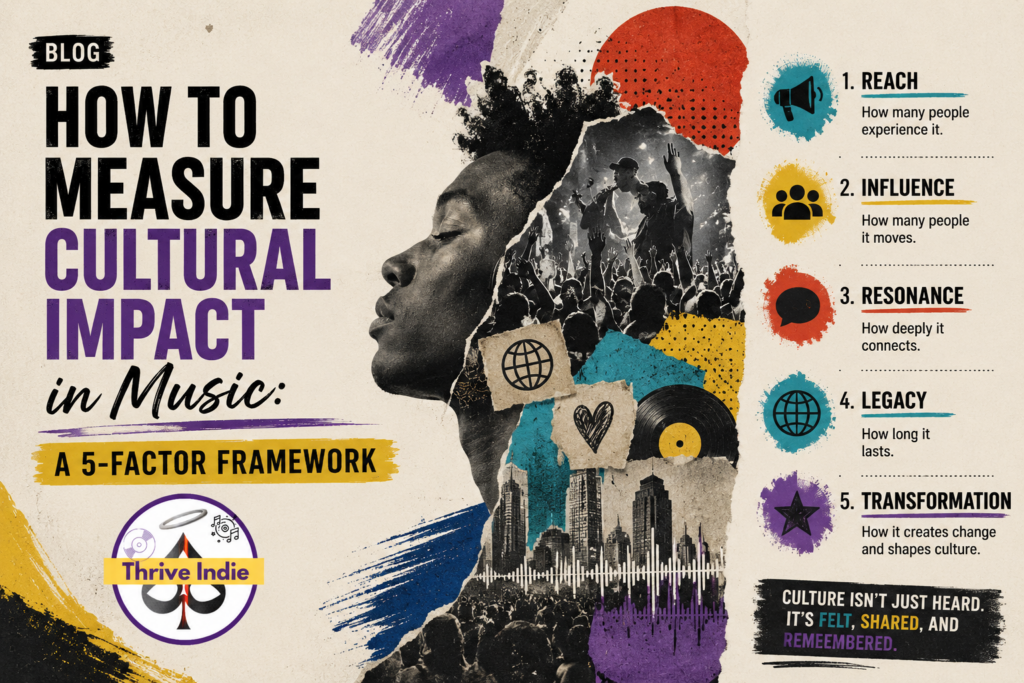
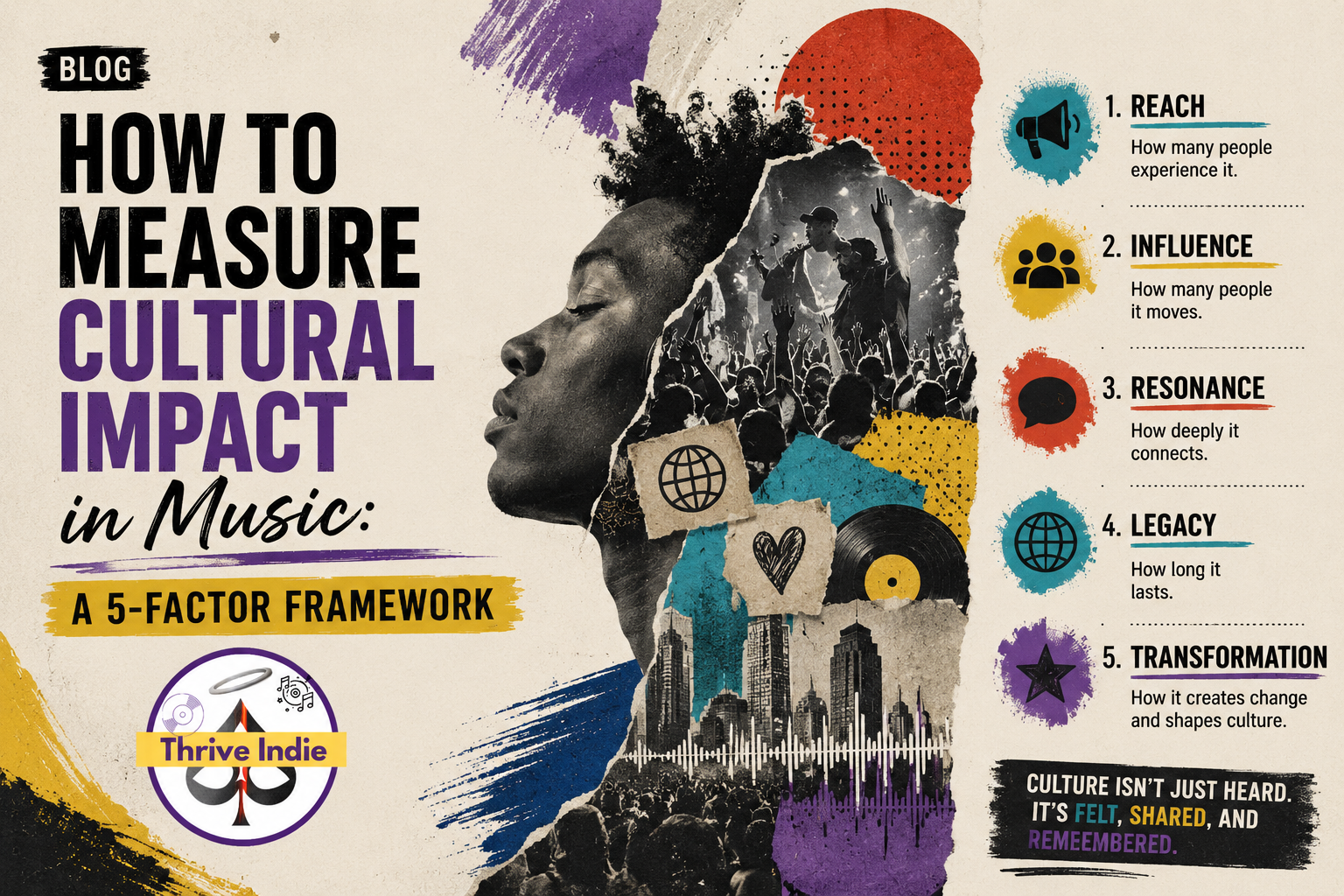
Culture doesn’t move at the speed of algorithms. If history judged music solely by first-week sales or streaming numbers, many of the most influential artists of all time would appear surprisingly ordinary. The Velvet Underground are considered one of the most influential bands of their era today but earned little commercial success during their run. Chief Keef never reached the commercial heights of fellow Chicago artist Kanye West, but is considered the catalyst for Chicago drill rap. Some songs become instant hits before disappearing just as quickly, while others reshape genres, inspire generations of musicians, and change the way audiences think about music.
This essay examines what separates artists who dominate conversations for a season from those who reshape music, influence generations of creators, and leave a lasting imprint on culture. By looking beyond traditional industry metrics, it proposes a broader framework for evaluating artistic significance—one that values influence, longevity, innovation, and the ability to change how people think, create, and connect with music.
Continue the conversation with How Should We Measure Cultural Impact?, a music industry analysis exploring why influence, longevity, and cultural significance often matter more than streams or chart positions.
Read the full essay → How To Measure Cultural Impact In Music

Attention has become the most valuable resource in the modern music industry. Every platform competes for it, every algorithm rewards it, and every artist depends on it. But attention alone isn’t enough. The artists who build sustainable careers are the ones who transform visibility into genuine influence.
This article explores why influence has become a form of currency. It also analyzes the correlation between human emotion and purchasing power. As traditional gatekeepers lose power, influence increasingly determines who shapes conversations and who gets left behind.
Explore Influence: Learn why influence has become one of the most valuable assets in the modern music business. This music industry analysis examines how attention, emotion, and purchasing behavior shape opportunities for independent artists.
Continue reading → Influence: Music’s Most Valuable Currency *(Historical Note: Originally published in 2019, this essay captured an early shift toward influence becoming one of music’s most valuable assets—a trend that has only accelerated since.)
The questions explored in this section intersect with broader research on cultural influence, social capital, and audience valuation in creative industries.
Some excellent complementary resources include:
Technology has always changed music. The microphone transformed performance. Multi-track recording reshaped production. The internet democratized distribution. But today’s technological shift is different because it doesn’t just influence how music is made; it changes what gets made. More than that, it alters who gets discovered, and why audiences pay attention in the first place.
Algorithms determine much of what listeners hear before they make a choice. Recommendation engines compete with radio programmers. Artificial intelligence assists with songwriting, production, and audience analysis. Meanwhile, platforms like TikTok and Spotify collect enormous amounts of behavioral data, allowing labels and tech companies to make better-informed decisions on automated systems.
The important question here is whether artists understand the systems shaping their careers enough to use them strategically or are they just reacting to them?
These essays explore the intersection of creativity, data, and technology. Think beyond headlines and ask how innovation is changing the business of music and the definition of artistry itself.
Understanding music industry tech is no longer optional for independent artists. It has become one of the defining competitive advantages in the modern music business.

The early days of the music industry relied on instinct. Record executives would flex about having “good ears,” believing experience and intuition were enough to identify the next superstar. Today, those instincts compete with dashboards filled with data from multiple touchpoints and predictive analytics.
As tech becomes more sophisticated, a fundamental question emerges: Can data identify great artists before people can? This article explores where data excels, where it falls short, and why the future of artist development depends on balancing both.
Read Will Big Data Trump Big Ears? for a deeper music industry analysis of how algorithms, predictive analytics, and human intuition are reshaping artist discovery and development. Learn what independent artists should understand about the growing role of data in the music business.
Explore the full article → Will Big Data Trump Big Ears *(Historical Note: First published in 2018, this music industry analysis examined the growing role of big data in artist discovery, A&R, and talent development. It anticipated many of today’s conversations surrounding artificial intelligence, predictive analytics, and the future of the music business.)

Artificial intelligence is reducing both the cost and speed of creating music. Songs, artwork, videos, and marketing assets can now be generated in minutes rather than weeks. As creative output becomes abundant, one thing becomes more valuable. Genuine human experiences.
This essay argues that AI and live music are not opposing forces but complementary trends that are evolving the industry from opposite directions. As artificial intelligence lowers the barriers to creating content, authentic human experiences ultimately become more valuable. Understanding this relationship offers a framework for where artists should invest their time, creativity, and business strategy over the coming decade.
Examine how artificial intelligence and authentic live experiences are redefining competitive advantage in the music industry. Gain practical music industry insights into where artists should focus as technology continues to evolve.
Dive Deeper → Why AI and Live Music Will Dominate the Next Decade

When this article was originally published, the platform’s long-term influence remained an open question. Many believed it was another passing social media trend. Others argued it represented the future of music discovery. Today, few can argue that the platform has influenced the music industry both drastically and controversially.
Hit songs can emerge overnight, unknown artists can become household names, and entire marketing campaigns are designed around short-form video.
Looking back, that debate captures a fascinating moment in industry history. This article preserves the uncertainty of that era while reminding us how difficult it is to predict which technological shifts will permanently change the music business and which will disappear.
Revisit one of Thrive Indie’s earliest music industry analyses, by longtime contributor Kellija Beloraga, of TikTok’s influence before its dominance became undeniable. This retrospective offers valuable music business insights into technology, prediction, and artist discovery.
Continue reading → TikTok: Fad or Factor *(Historical Note: Originally published in 2022, when TikTok’s long-term influence was still heavily debated, this article preserves an important moment in music industry history.)
Advancing tech is transforming every layer of the music ecosystem. From recommendation algorithms and AI-generated content to even changing consumer behavior. These resources provide valuable context for understanding the forces explored throughout this section.
Talent opens doors; strategies keep them open.
Successful careers are not built on breakthrough moments. They are built by infrastructures that continue creating opportunities after a viral moment fades. A hit song can introduce an artist to the world, but it can’t build the system it takes to develop a successful career. Managing releases, negotiating opportunities, retaining fans, and building a long-term business are all aspects of success in the music industry.
Today’s independent artists face an additional challenge. Algorithms reward speed, consistency, and constant engagement. This encourages artists and creators to prioritize short-term visibility over long-term career development. The result is a generation of artists who know how to attract attention but struggle to convert that attention into real, sustainable growth.
This section shifts the conversation from chasing momentum to building foundations. These essays explore the infrastructure, professional tools, and strategic thinking required to create a career that can survive changing platforms, evolving technology, and shifting industry trends. The goal isn’t simply to grow faster—it’s to build a career that becomes stronger over time.
The platforms you rely on to grow your audience are designed to maximize engagement, not your career. Every upload, trend, challenge, and algorithm update competes for your attention, making it easy to confuse platform success with business success.
This essay challenges artists to ask a difficult question: Are your daily efforts building an asset you own, or are you creating value for someone else’s platform? It explores the tension between visibility and ownership while offering a framework for balancing short-term content creation with long-term career strategy.
Take a close look at one of the biggest questions facing independent artists today. Are you building something you own or simply creating value for digital platforms? This music industry analysis offers a long-term framework for career strategy.
Read the full essay → Are You Building a Career—or Feeding the Algorithm?

Every successful artist has an infrastructure, whether they realize it or not. Some build it intentionally. Others discover its importance only after opportunities begin slipping away. The difference often determines whether early momentum becomes a lasting career or a missed opportunity.
This article introduces a practical framework for understanding the visible and invisible systems supporting an artist’s business. From branding and fan relationships to operations, data, and business processes, it explains why infrastructure creates long-term leverage in the modern music industry.
Continue with The Two Layers of Independent Artist Infrastructure, where we break down the two systems that support sustainable artist careers beyond music alone. Discover practical music business insights into building infrastructure that creates long-term opportunity.
Explore the article → The Two Layers of Independent Artist Infrastructure
Behind every recording, live performance, and public play of a song exists a network of organizations responsible for tracking usage and distributing royalties. Yet Performance Rights Organizations (PROs) remain one of the least understood parts of the music business. Many independent artists are unaware of income they may be entitled to collect.
This article explains what PROs are, why they matter, and how they fit into a broader music rights strategy. Understanding the business behind your songs is just as important as creating them—and protecting your work begins with understanding how the industry compensates creators.
Better understand performance rights organizations, music royalties, and one of the most overlooked areas of the music business. Every independent artist should understand how these systems protect creative work and generate income.
Continue reading → PRO: What Every Indie Artist Needs to Know *(Historical Note: One of Thrive Indie’s earliest educational resources, originally published in 2017, introducing independent artists to one of the music industry’s most misunderstood systems.)
Opportunities can come from nowhere. Whether pitching festivals, opening for touring artists, approaching media outlets, or speaking with industry professionals, the ability to communicate your value quickly can determine whether a conversation continues—or ends.
A professional one-sheet is more than a biography or résumé. It is a strategic communication tool that presents your story, achievements, audience, and brand in a format decision-makers can evaluate within minutes. This article explains why every serious artist should treat a one-sheet as an essential part of their professional infrastructure.
Learn why a professional one-sheet remains one of the most valuable tools in an independent artist’s career. This practical music business guide explains how preparation and presentation create opportunities long before the first conversation begins.
Read the article → What are One-Sheets and Why do Artists Need Them (Originally Published in 2020)
Building a sustainable music career requires more than creative talent. It demands a working knowledge of branding, fan development, intellectual property, business planning, and the systems that support long-term growth. These resources provide additional insight into the professional side of building an independent music career.
Every controversial moment in the music industry contains lessons that extend beyond the story itself. The modern music business moves quickly, but beneath the constant news cycle are recurring patterns. Understanding those patterns is what separates entertainment from insight.
The challenge is that most people stop at the headline. They celebrate a viral moment without asking what created it, criticize a business decision without understanding the incentives behind it. They analyze results while ignoring the systems, relationships, and long-term thinking that produced them.
This section applies the ideas explored throughout Thrive Indie to real-world events. Each article offers music industry analysis that examines why certain artists succeed, why specific moments resonate, and what independent musicians, managers, and entrepreneurs can learn from them. Rather than focusing on celebrity gossip, these essays identify the strategic decisions and cultural forces shaping today’s music industry.
Understanding the industry isn’t just about learning concepts. It’s about recognizing those concepts in action.
The conversation surrounding hip-hop in 2024 was focused on one story: the highly publicized feud between Drake and Kendrick Lamar. Diss tracks broke streaming records, social media fueled nonstop debate (and still do), and nearly every major hip-hop discussion revolved around the rivalry. Amid all the controversy, another artist quietly had one of the year’s most strategically impressive runs.
While the spotlight remained fixed elsewhere, Future strengthened his commercial position. In 2024, he demonstrated how consistency, timing, collaboration, and strategic execution can produce extraordinary results. Three No. 1 albums and 49 Billboard entries- and that’s just to start. This case study argues that one of the biggest winners of 2024 wasn’t necessarily the artist who won the debate—it was the artist who built the strongest overall year.
A music industry analysis examining how consistency, timing, and strategic execution quietly produced one of hip-hop’s strongest years. Discover why the biggest winner isn’t always the loudest headline.
Read the full case study → Future: The Overlooked Rap MVP of 2024
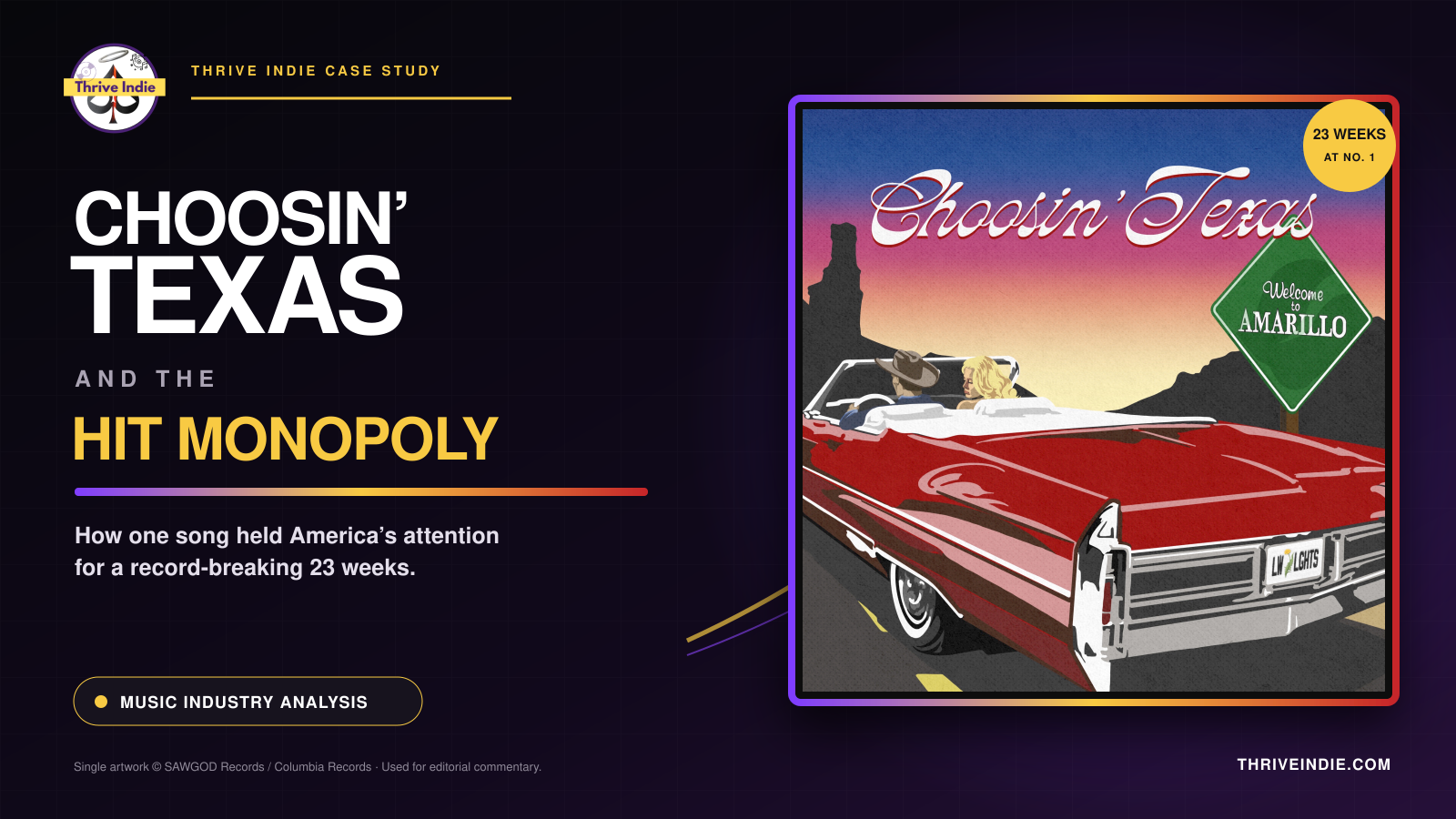
When Ella Langley’s “Choosin’ Texas” became the longest-running No. 1 song in Billboard Hot 100 history, it did more than break a record—it revealed how concentrated attention has become in modern music. While artists have more ways to release and promote music than ever before, a small number of dominant songs can still capture a disproportionate share of listening, visibility, and cultural conversation. This case study introduces the Hit Monopoly and Hit Concentration Effect to explain why access has expanded without guaranteeing discovery, how cross-platform reinforcement turns popularity into sustained dominance, and what independent artists can learn from the widening distance between releasing music and commanding attention.
Read the full case study → “Choosin’ Texas,” the Billboard Record and the Hit Monopoly

When Iconic Savvy found herself connected to one of the biggest names in music, public curiosity exploded almost overnight. But viral attention alone cannot create a sustainable career. So what does an artist do after the spotlight arrives?
The music industry rewards artists who know how to capitalize on opportunity. Sometimes those opportunities are carefully planned. Other times, they appear unexpectedly. The difference between artists who capitalize on these opportunities and those who don’t often comes down to preparation.
This article examines the difference between opportunity and preparation. Using Iconic Savvy’s viral moment as a case study in modern artist development. It explores how visibility can create leverage, why infrastructure matters before momentum arrives, and what independent artists should do when unexpected opportunities emerge. More than a viral story, it is a music industry analysis of timing, branding, and career strategy.
Explore Who Is Iconic Savvy? What Independent Artists Can Learn From Her Drake Moment. See how preparation transforms unexpected visibility into long-term opportunity. This music industry analysis offers valuable lessons in branding, timing, and career strategy for independent artists.
Continue reading → Who Is Iconic Savvy? What Independent Artists Can Learn From Her Drake Moment

Few marketing principles have endured as long as the phrase, “sex sells.” Yet in today’s attention economy, the relationship between sexuality, branding, and commercial success has become more complex than ever.
While sexual imagery can generate enormous attention, it also raises important questions about authenticity, longevity, audience perception, and brand identity.
This essay provides a music industry analysis of one of entertainment’s oldest marketing strategies. Rather than reducing the conversation to morality or controversy, it explores the economic incentives, cultural expectations, and psychological factors that help explain why the strategy continues to endure.
A thoughtful music industry analysis of one of entertainment’s oldest marketing strategies. Examine the relationship between branding, audience psychology, and commercial success in today’s music business.
Explore the full essay → Sex Sells: Music & The Business of Sex (Originally Published in 2021)
Real-world case studies become even more valuable when viewed alongside reliable industry data and reporting. These resources provide additional context for understanding how artist strategy, consumer behavior, and industry trends influence the moments discussed throughout this section.
The music industry will continue changing.
New platforms will emerge. Technology will evolve. Business models will shift. Algorithms will change. New ones will replace today’s headlines. Yet beneath every innovation lies several enduring principles that continue to shape how artists build careers and generate opportunity.
That is the purpose of this collection.
The Intellectual History of Thrive Indie is not an archive of articles. It is a living record of the ideas and observations that have shaped this publication since its beginning. Some essays challenge conventional wisdom. Others explore emerging technologies, industry economics, or cultural shifts. Together, they represent an ongoing effort to understand not only what is happening in the music industry, but why it is happening.
As the industry continues to evolve, so will this collection. New essays will be added, old ideas will be revisited, and future developments will undoubtedly reshape some of today’s assumptions. That evolution is intentional. Understanding the music industry isn’t about finding permanent answers; it’s about continually asking better questions.
Whether you’re an artist, manager, entrepreneur, or simply someone fascinated by the business of music, I hope these essays encourage you to think more critically, challenge accepted narratives, and build a career based not on trends, but on principles that endure.
Welcome to the ongoing conversation.